The silence of the sun is an illusion. Sun`s sound is essentially vibration and needs…
Read More →
The silence of the sun is an illusion. Sun`s sound is essentially vibration and needs…
Read More →
The World Mammoth Center is expected to commence operations in Yakutia in the near future.…
Read More →
Doubling of fish biomass and rebounding of endangered species shows government measures starting to work,…
Read More →
Imagine that wind turbine blade is more than 100 meters long. At that size, many…
Read More →
Letters to US Federal Communications Commission raise concerns over tech firms’ plans to use reflective…
Read More →
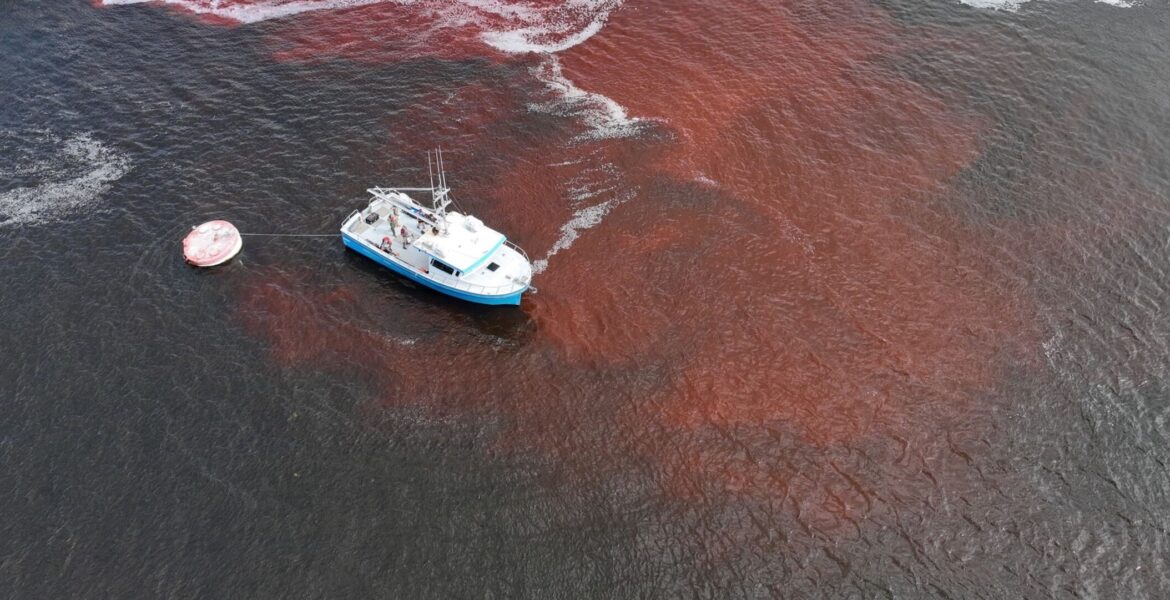
To some it seemed a thoughtless step but scientists hope the dispersal of 65,000 litres of sodium hydroxide into the Gulf of Maine could ease the climate crisis.
Last August, a thick slick of maroon bruised the waters of the Gulf of Maine. The scene, not unlike a toxic red tide, was the result of 65,000 litres of an alkaline chemical, tagged with a red dye, that had been deliberately pumped by scientists into the ocean.
Though it sounds perverse, the event was part of a scientific experiment that could advance a technology to combat both global heating and ocean acidification. Ocean alkalinity enhancement (OAE), as the approach is called, acts like natural weathering, but on human – rather than geological – timescales.
“The ocean is already incredibly alkaline. [It holds] 38,000bn tonnes of carbon, stored as dissolved bicarbonate, or baking soda,” says Adam Subhas, the lead oceanographer of the research team who announced early results from their test at the AGU Ocean Sciences Meeting in Glasgow.
Boosting this natural alkalinity using a chemical antacid should, in theory, encourage the ocean to absorb more carbon. Over a large surface area, and in combination with sharp emissions reductions, OAE could prevent global temperatures exceeding 2C above preindustrial levels, while locally reducing ocean acidity, which is now higher than at any point in the past million years and poses a dire threat to marine life and fisheries.
Licensed by the US Environmental Protection Agency and overseen by scientists from the Woods Hole Oceanographic Institution, the experiment took place 50 miles off the coast of Massachusetts in an area commonly fished for cod, haddock and lobster.
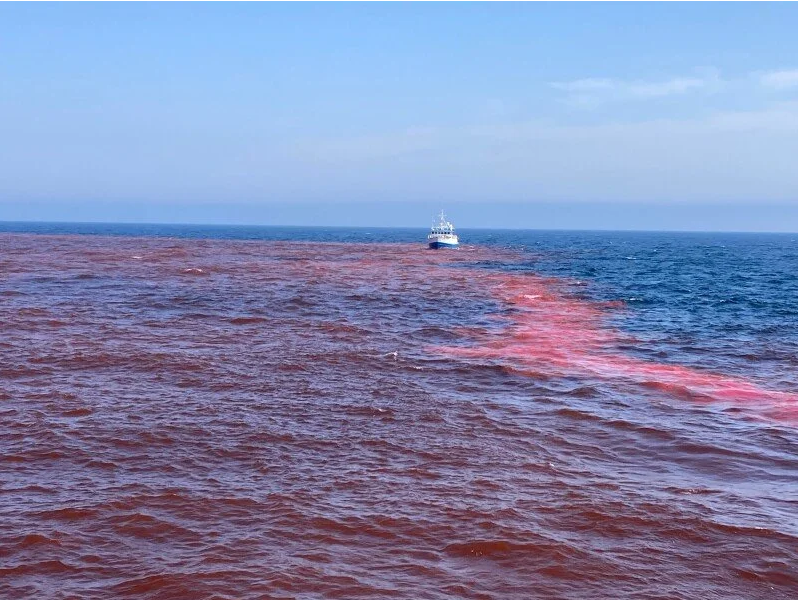 The study found preliminary promising results. The Loc-Ness project used advanced technology including autonomous gliders, long-range autonomous underwater vehicles and shipboard sensors to trace the dispersal of sodium hydroxide, an alkaline chemical that was tagged with a red dye, from the release site.
They measured up to 10 tonnes of carbon entering the ocean and an increase in local pH at the deployment site from 7.95 to 8.3, which represents a return of ocean alkalinity to preindustrial levels. The experiment showed no significant harm to creatures including plankton and fish and lobster larvae, though the team did not measure the impact on adult fish or marine mammals.
In practice, OAE is like liming first used 2,000 years ago by Greeks to neutralize the acidity of their fields. More recently, in the 1980s, Scandinavian rivers suffering fish declines from acid rain were heavily dosed with alkaline lime; reported successes include the return of native salmon to Sweden’s Ätran River.
There are already numerous OAE startups verified to sell carbon credits through an international carbon removal registry, Isometric. Those credits are being bought by companies who aim to bill their businesses as net zero.
Yet it is still unclear whether OAE works safely at the level required to have a climate benefit.